
Technology Guide
How Breathalyzers Work
From Breath Sample to Alcohol Reading: Inside a Modern BreathalyzerA breathalyzer measures alcohol in exhaled breath by collecting a breath sample, detecting ethanol through a sensor, processing the sensor signal and converting the result into a readable alcohol concentration.
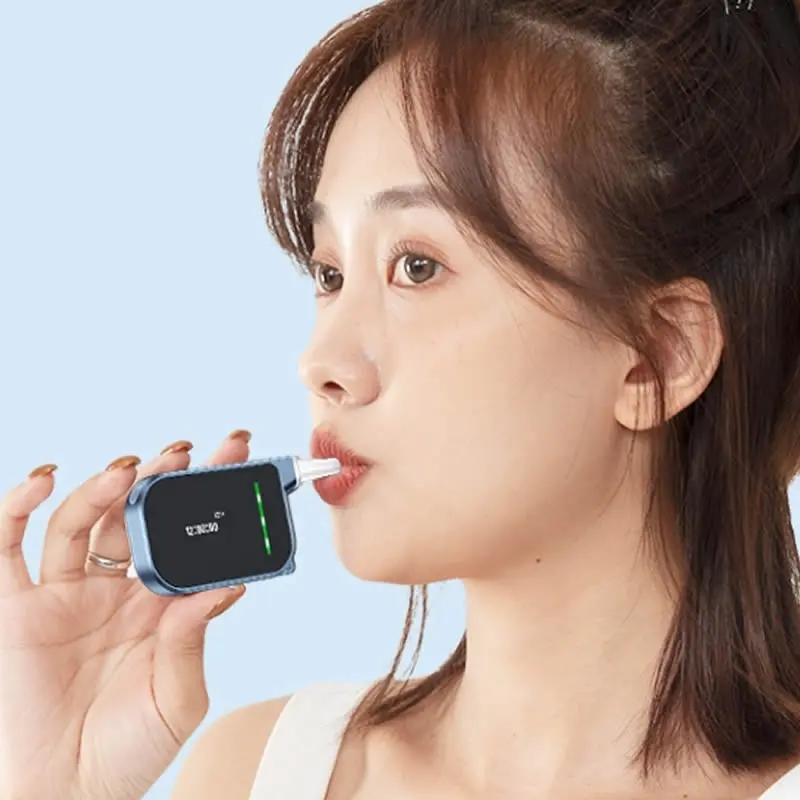
The basic measurement process
How a Breathalyzer Measures Alcohol
Although different products may vary in design, the core process follows the same logic: breath sampling, sensor response, signal processing, calibration and result display.
STEP 01
AIR
Breath Sampling
A representative sample of exhaled breath enters the breathalyzer through the mouthpiece or sampling channel.
STEP 02
S
Sensor Reaction
The alcohol sensor responds to ethanol in the breath sample and generates a raw measurement signal.
STEP 03
SIG
Electrical Signal
The response becomes an electrical output that can be captured by the internal electronic system.
STEP 04
CAL
Algorithm & Calibration
Algorithms and calibration data translate the signal into a meaningful alcohol concentration value
STEP 05
BAC
Result Display
The final reading appears in a selected unit such as %BAC, mg/L, ‰BAC or another market-specific format.
STEP 01
Breath Sampling
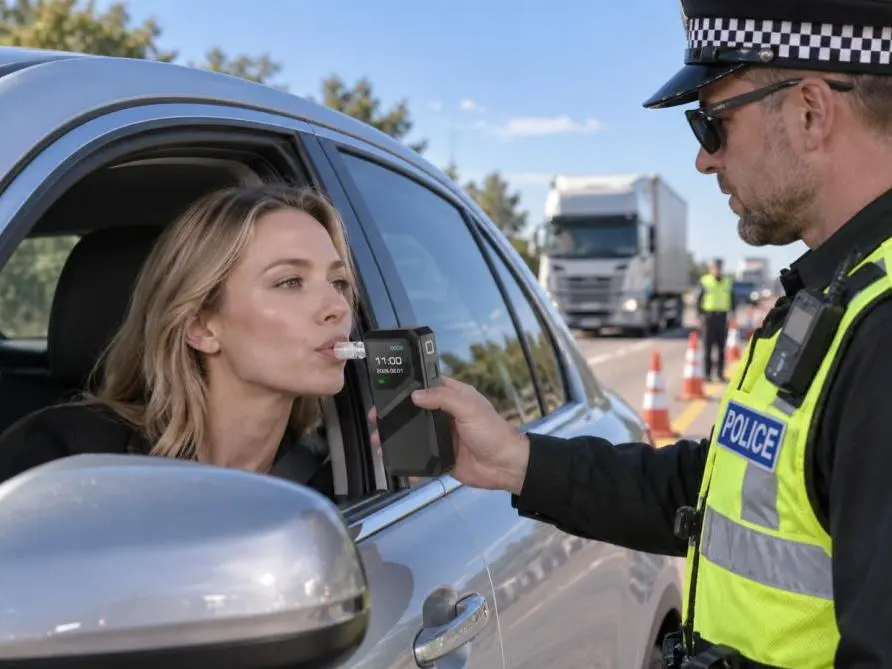
The measurement process begins when the user exhales into the device. A suitable breath sample must reach the sensing system so the instrument can analyze alcohol in the breath stream.
Some breathalyzers use simple direct blowing. Professional models may add controlled sampling to improve repeatability and help manage the breath sample more consistently.
Airsense Product Example
In Airsense pump-sampling models such as the
H3 Pro / S1
an active pump helps control the sampling process and deliver the breath sample to the sensor more consistently.
Breath sample quality matters
Step 2
Alcohol Sensor Technologies
Different breathalyzers may detect alcohol using different sensor technologies. The two most common categories are fuel cell and semiconductor sensing.
Pt
Fuel Cell / Electrochemical
In a fuel cell sensor, alcohol molecules are oxidized at the sensing surface. This reaction produces an electrical current related to the amount of ethanol in the breath sample.
Airsense examples: K1, H3, H3 Pro and S1 use fuel-cell sensing platforms.
SC
Semiconductor
Semiconductor sensors detect alcohol through changes in the electrical characteristics of a heated sensing material when exposed to alcohol-containing breath.
Airsense example: A5 uses a semiconductor sensing platform.
Step 3
From Sensor Signal to Data
A sensor by itself does not create a user-friendly reading. The raw output must be captured, amplified, filtered and processed by the electronics and firmware inside the device.
This is one reason why two products using similar sensors can still perform differently in real use.
The sensor detects alcohol, but the complete breathalyzer determines how that signal becomes a usable measurement.
Step 4
Why Calibration Matters
Calibration helps ensure that the signal-to-concentration conversion remains within the intended measurement range over time.During calibration, the instrument is checked against a known alcohol reference standard. If needed, the device can be adjusted so that future readings remain reliable.
Alcohol concentration
BAC and BrAC Are Related — But Not the Same
A measure associated with alcohol concentration in blood.
BAC
Blood Alcohol Concentration
A measure associated with alcohol concentration in blood. Some breathalyzers may display results in a BAC-equivalent format for user familiarity.
BAC
Blood Alcohol Concentration
The quantity directly associated with alcohol present in exhaled breath—the physical target of breath alcohol testing.
Different product architectures
Not All Breathalyzers Work Exactly the Same Way
The same basic principle can be implemented in different ways depending on the intended application, cost target and feature requirements.
Personal / Portable
Compact products built for everyday use and convenient portability.
K1 / H3
Professional Screening
Products that add stronger sampling control and more professional positioning.
H3 Pro
High-Frequency Use
Platforms for data handling, intensive use and longer-term service support.
S1
Cost-Sensitive Testing
A more economical architecture for general consumer-oriented alcohol detection.
A5
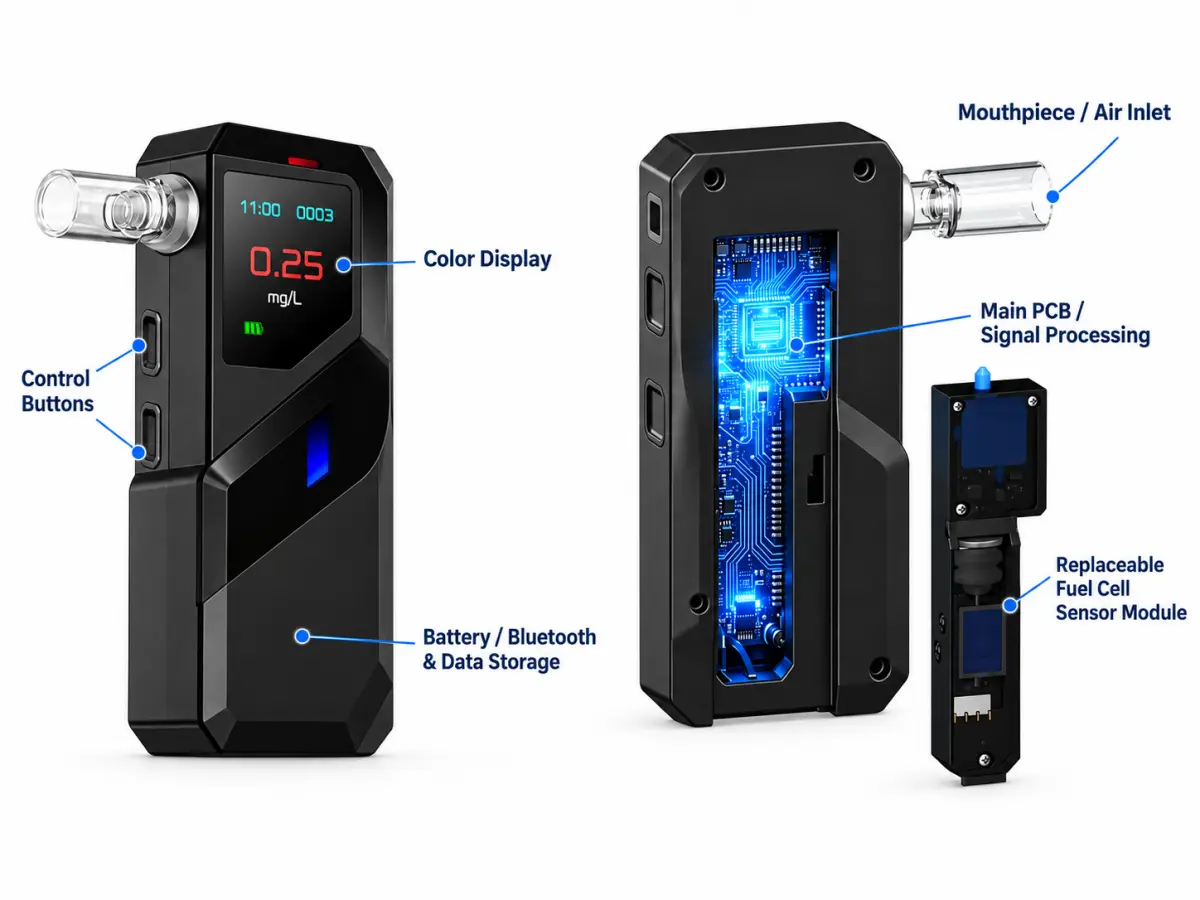
Inside an Airsense Breathalyzer
Real Products Put the Technology Together
A practical breathalyzer combines airflow management, sensing, signal processing, power management, display logic and user interaction in a single compact device.
This is why breathalyzer performance depends on the complete system—not simply the label of the sensor alone.
ell us your application, testing frequency and measurement requirements. Airsense can help you select an appropriate breathalyzer platform and explain the relevant test and calibration approach.