
— Measurement Performance Guide
Breathalyzer Accuracy and Repeatability
How to Evaluate Measurement Performance in Real-World TestingAccuracy tells you how close a breathalyzer reading is to a known reference. Repeatability tells you how consistently the instrument produces similar results when the same test is repeated under the same conditions.
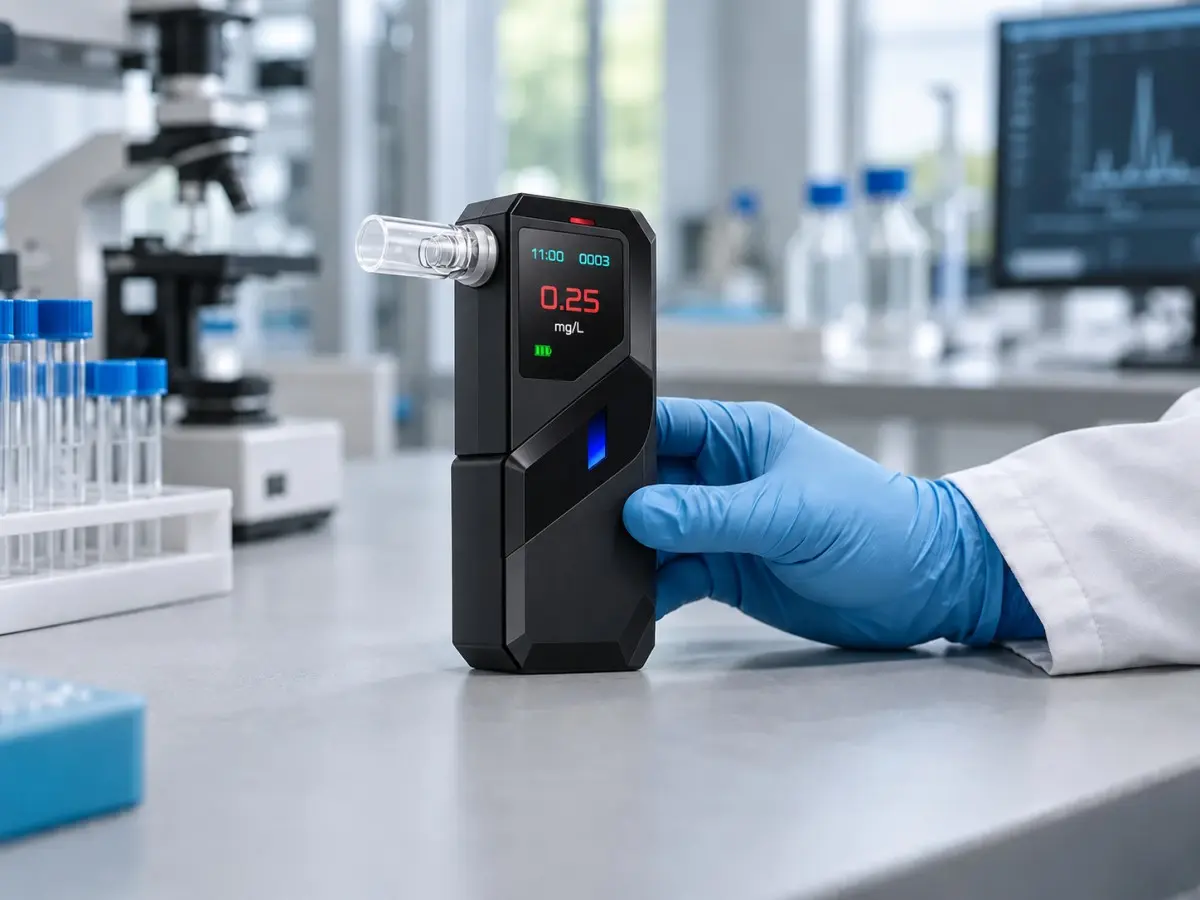
— Two different concepts
Accuracy vs Repeatability
A device can produce very similar readings every time and still be wrong. Understanding both concepts is essential when evaluating a breathalyzer.
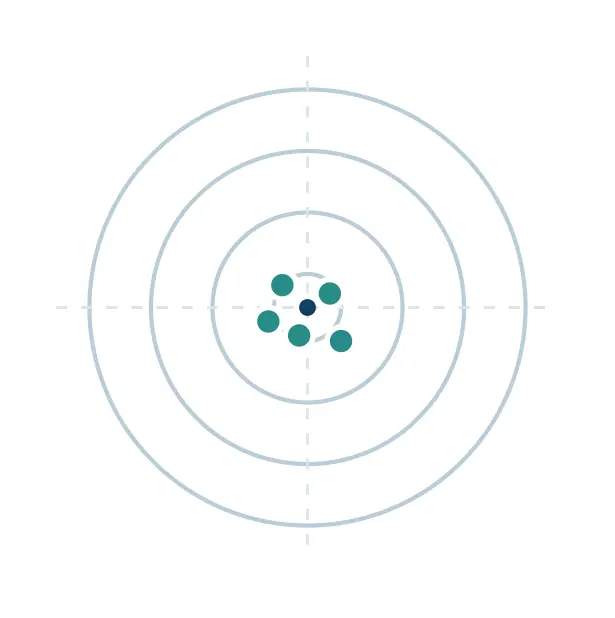
01 / CLOSE TO THE
REFERENCE
Accuracy
How close is the reading to the reference?
Accuracy describes how closely a measured value agrees with a known reference value under the specified test conditions.
Reference: 0.050
0.050
0.051
0.050
0.049
0.050
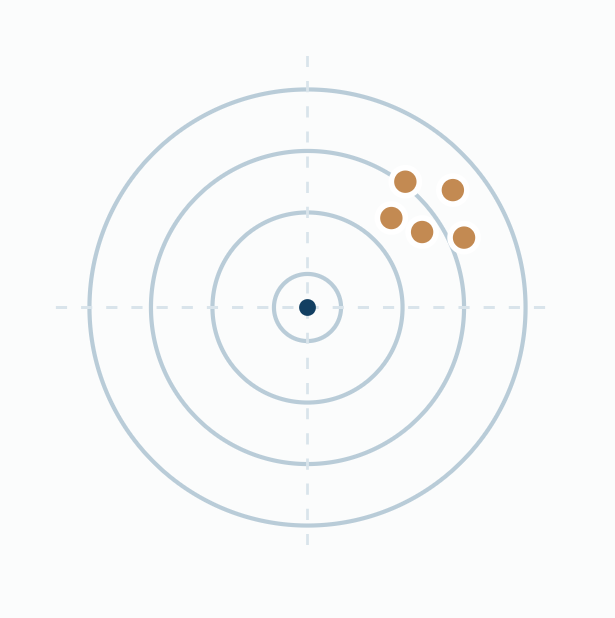
02 / CLOSE TO EACH
OTHER
Repeatability
How consistent are repeated measurements?
Repeatability describes how closely repeated readings agree with each other when the same procedure is repeated under the same conditions.
Same Test Conditions
0.060
0.061
0.060
0.061
0.060
Accuracy and Repeatability Are Not the Same
Fuel Cell Platforms
Fuel cell sensing systems do not rely on maintaining a heated semiconductor surface, so many designs can begin testing with little or no conventional warm-up.
Good Accuracy · Good Repeatability
Semiconductor Platform
Reference: 0.050
Good Repeatability · Poor Accuracy
Illustrative example only. Acceptance limits should always be evaluated against the applicable product specification or test standard.
Practical test guide
How to Test Breathalyzer Accuracy
A meaningful accuracy check requires a known alcohol reference and controlled test conditions. An unknown human breath sample cannot tell you whether the instrument itself is accurate.
Use the procedure specified for the breathalyzer model and the applicable test standard.
Use an appropriate certified alcohol reference such as a dry gas standard or wet bath simulator according to the product procedure.
Confirm device condition, calibration status, power level, sampling path and environmental conditions before testing.
Introduce the known reference using the specified test or calibration method and allow the instrument to complete the measurement cycle.
Document the displayed value and any relevant conditions so repeated tests can be compared consistently.
Evaluate the measured value against the known reference and the tolerance specified for the model or test protocol.
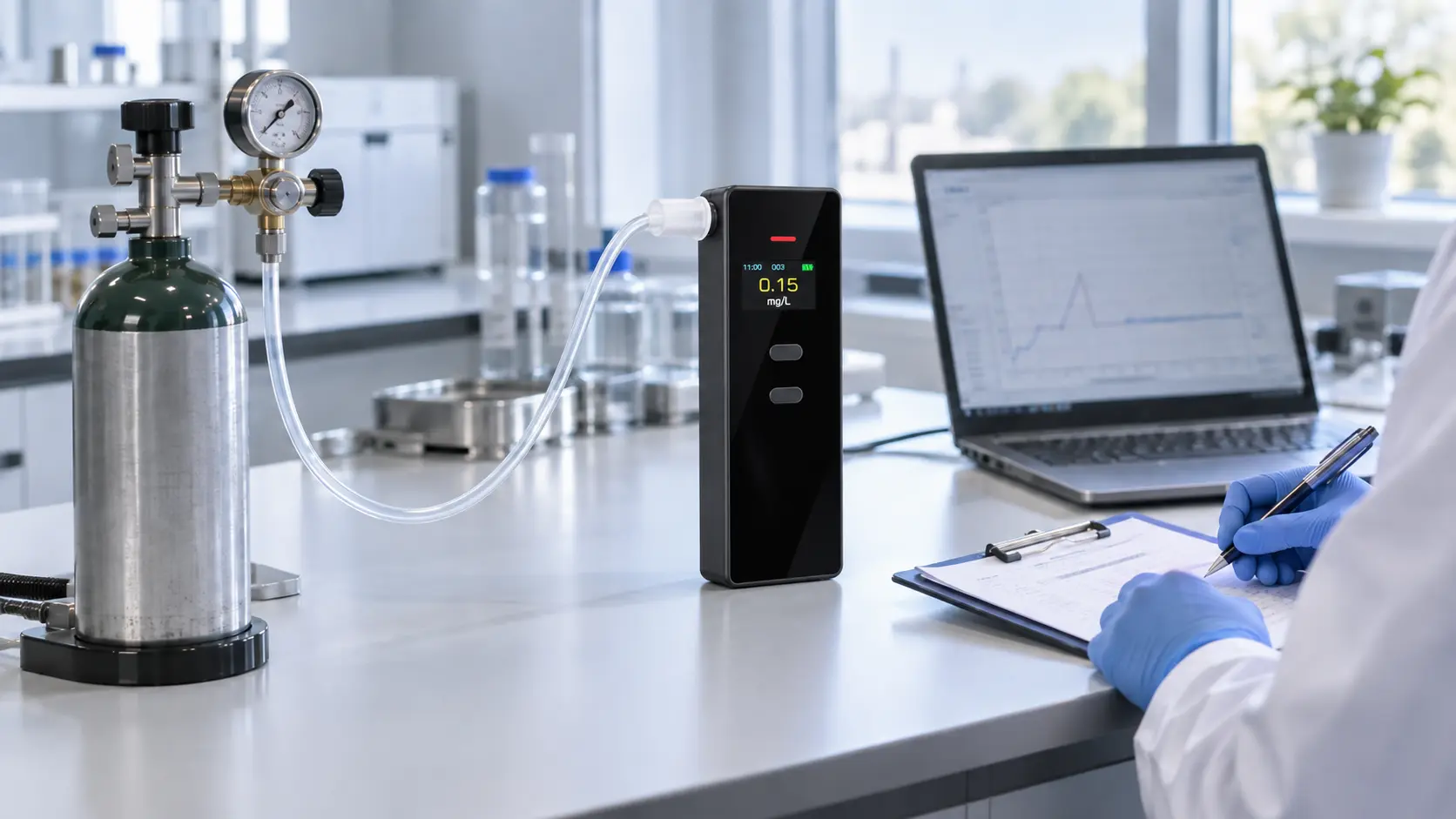
Known Alcohol Reference
Stable Test Conditions
Breathalyzer Test
Record Reading
Compare With Reference
Repeatability testing
How to Evaluate Repeatability
Repeatability requires multiple measurements performed using the same procedure under consistent conditions. One reading can suggest agreement with a reference, but it cannot show how consistent the instrument is.
Good Repeatability
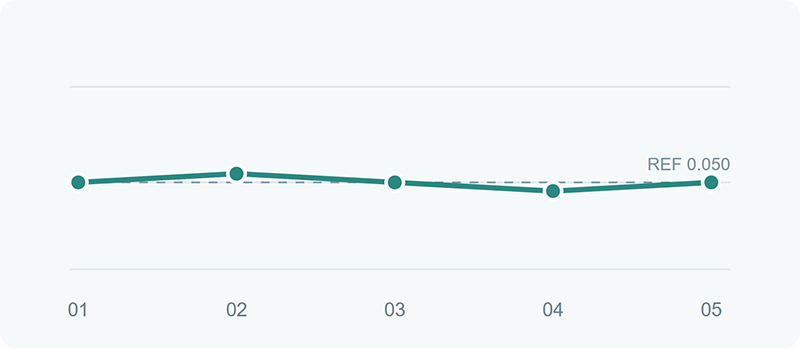
Repeated readings remain closely grouped when the same test is repeated under controlled conditions.
Reference: 0.050
0.050
0.051
0.050
0.049
0.050
Poor Repeatability
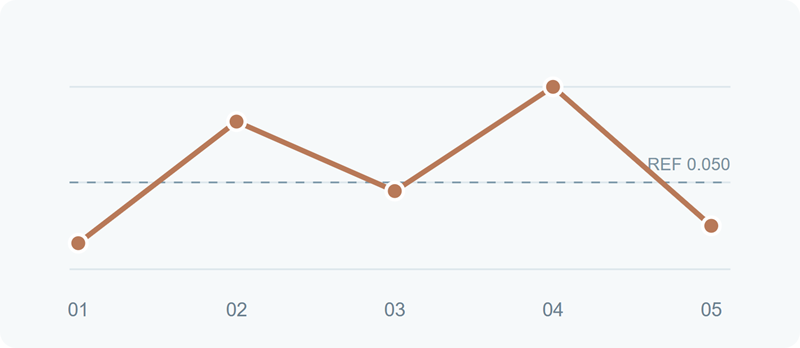
Readings vary widely even though the same test procedure and reference are used.
Reference: 0.050
0.043
0.057
0.049
0.061
0.045
Repeatability testing
How to Interpret Measurement Performance
Accuracy and repeatability answer different questions, so they should be evaluated separately.
Accuracy
Compare the measured value with the known reference value.
Measurement Error = Measured Value − Reference Value
Whether the error is acceptable depends on the tolerance specified for the product model or applicable test standard.
Repeatability
Compare repeated readings with each other under the same test conditions.
Smaller Variation Between Repeated Readings = Better Repeatability
Advanced evaluation may use statistical measures such as range or standard deviation depending on the test protocol.
What changes the result?
Factors That Affect Accuracy & Repeatability
Measurement performance depends on the entire test system—not only the nominal specification of the alcohol sensor.
A common misunderstanding
Human Breath vs Reference Standard Testing
Human breath is useful for practical use testing, but it is not a controlled reference for evaluating instrument accuracy.
Human Breath Testing
Reference Standard Testing
You cannot accurately evaluate a breathalyzer using an unknown breath sample.
Avoid false conclusions
Common Breathalyzer Testing Mistakes
Many apparent “accuracy problems” come from uncontrolled testing rather than from the instrument itself.
Airsense quality perspective
How Airsense Evaluates Measurement Performance
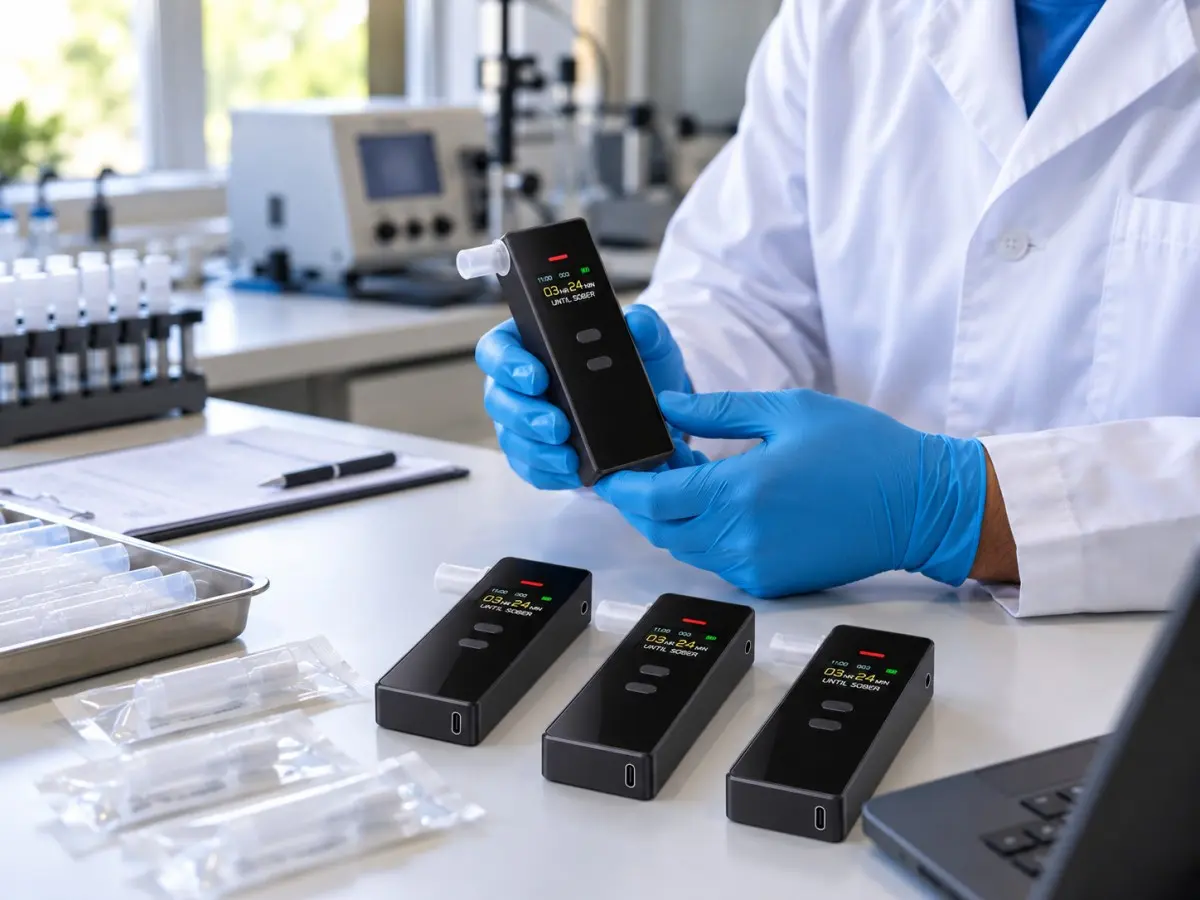
Airsense approaches breathalyzer performance as a system-level result involving the sensor, sampling path, electronics, calibration and measurement logic.
For formal production and quality-control claims, the exact test procedure should be based on the applicable Airsense model specification and internal quality documentation.
Different applications
Performance Requirements Depend on How the Breathalyzer Is Used
A personal breathalyzer and a high-frequency professional screening device do not necessarily need the same architecture or service strategy.
Personal Testing
Compact design, convenience and appropriate measurement performance for individual use.
Airsense examples: K1 / H3 / A5
Professional Screening
Stronger emphasis on repeatability, sampling control and reliable operation across repeated tests.
Airsense example: H3 Pro
High-Frequency Professional Use
Greater focus on data handling, maintainability, sensor service and repeated daily testing.
Airsense example: S1
Frequently asked questions
Accuracy & Repeatability FAQ
Common questions about evaluating breathalyzer measurement performance.
ell us your application, testing frequency and measurement requirements. Airsense can help you select an appropriate breathalyzer platform and explain the relevant test and calibration approach.