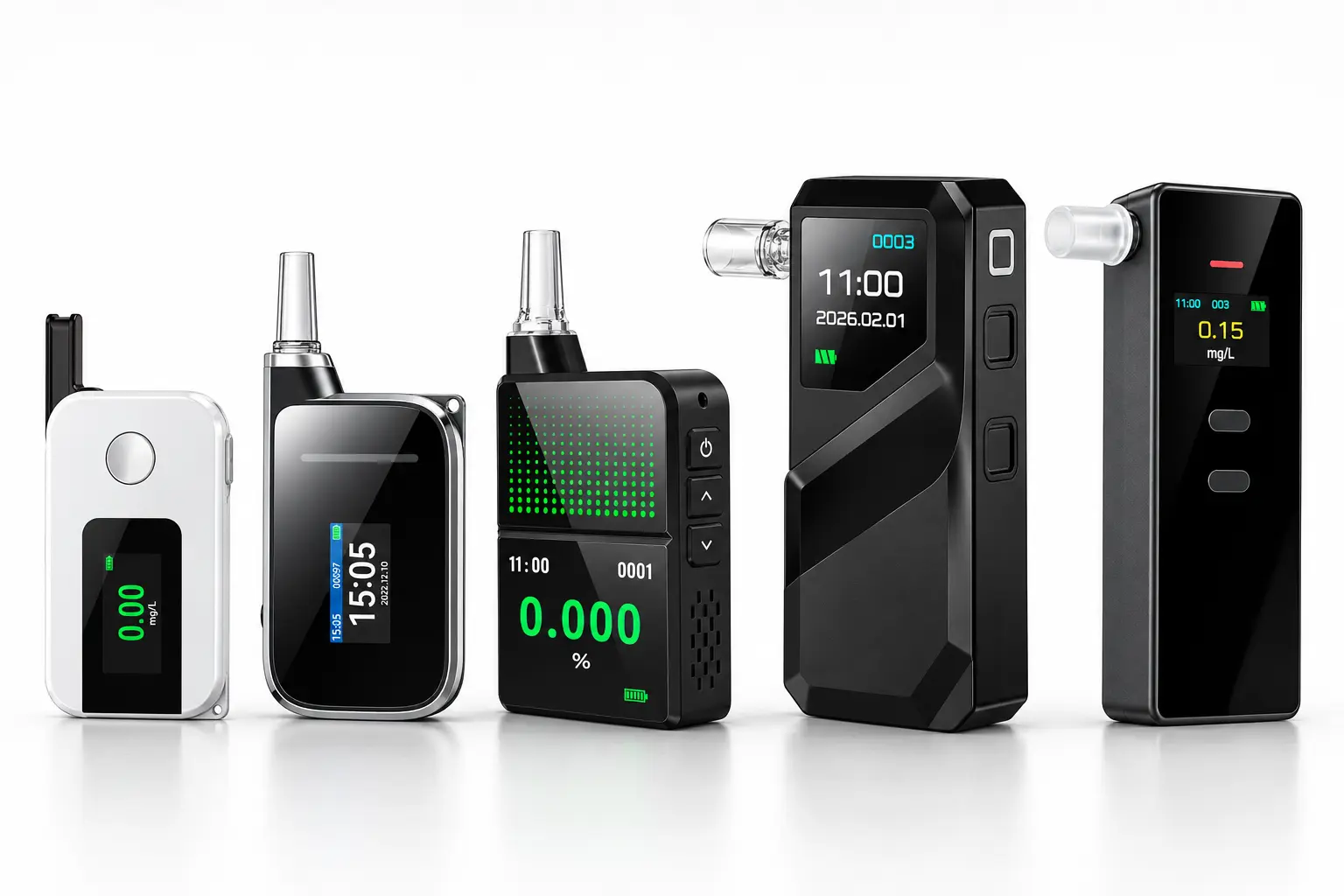
PRODUCT MAINTENANCE & SENSOR TECHNOLOGY
Understanding a Replaceable Breathalyzer Sensor
A breathalyzer's sensor is central to its measurement performance. A replaceable sensor design makes it possible to service the sensing component without necessarily replacing the complete device. But what does that mean for long-term maintenance, calibration and professional distribution?
What Is a Replaceable Breathalyzer Sensor?
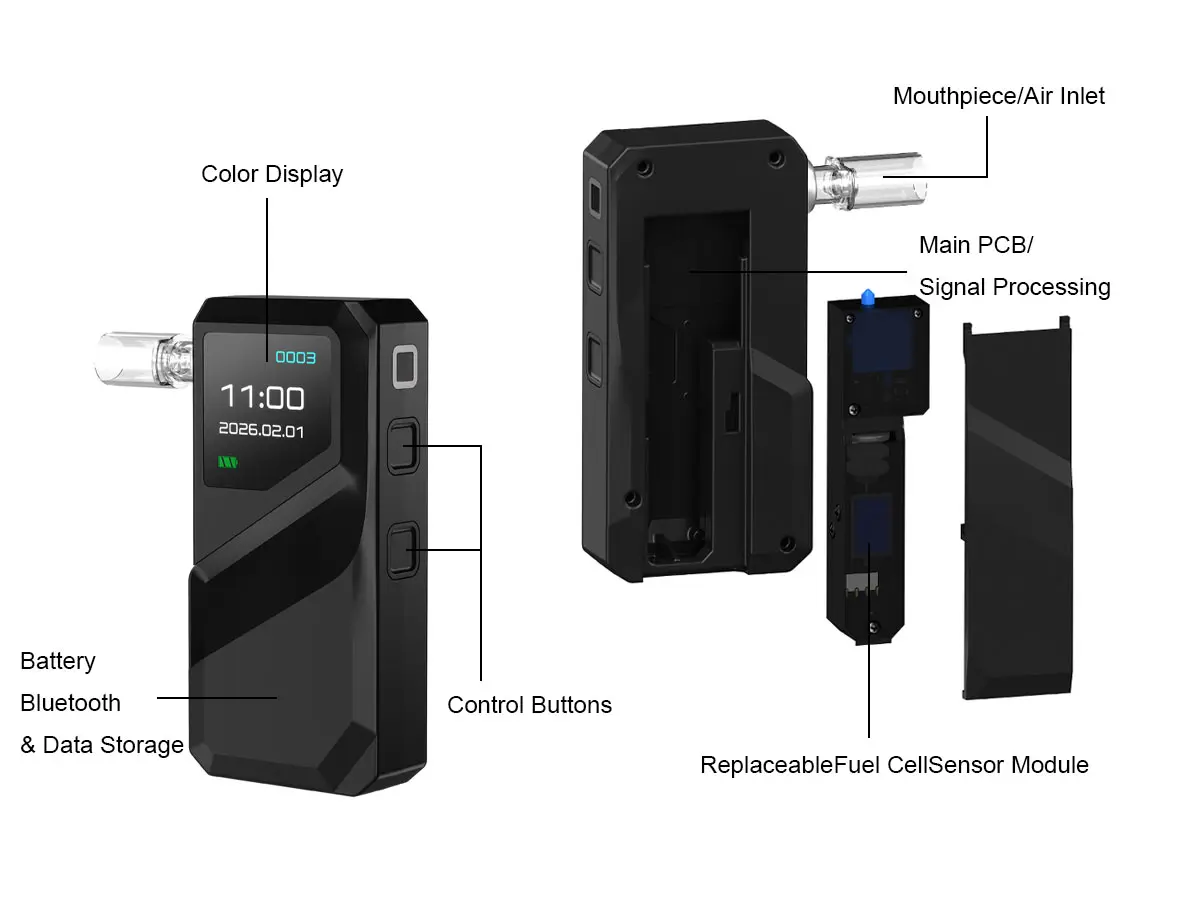
A replaceable breathalyzer sensor is a sensing component or module designed to be removed from a compatible breathalyzer and replaced when servicing is required.
Depending on the product architecture, the replaceable assembly may contain the sensing element and other related components. The replacement process, calibration requirements and permitted service personnel depend on the manufacturer's design.
Some breathalyzers require specialized servicing of internal components. Others use a more modular structure that can simplify replacement of the sensing assembly.
The Airsense S1 Professional Breathalyzer features a replaceable UK Dart fuel cell sensor as part of its professional product platform.
Why Do Breathalyzer Sensors Need Maintenance?
Breathalyzer sensors are measurement components, not permanent parts that can be assumed to remain accurate indefinitely.
Over time, sensor response may change because of aging, environmental exposure, contamination, use conditions or other factors. Measurement stability must therefore be managed through the manufacturer's recommended inspection, calibration and maintenance procedures.
The device repeatedly fails to remain within its required verification limits.
The instrument shows inconsistent or abnormal behavior that cannot be resolved through normal troubleshooting.
A qualified technician identifies a sensing component that requires replacement.
These signs do not automatically mean the sensor is defective. Sampling problems, firmware, contamination or calibration conditions may also require investigation.
Airsense recommends checking the applicable model documentation and obtaining technical guidance before replacing an internal component.
Replaceable vs Non-Replaceable Sensor Designs
For importers and distributors, the most important difference is often the service process rather than the sensor's initial performance.
| Service Consideration | Replaceable Design | Non-Modular Design |
|---|---|---|
| Sensor servicing | Sensor module may be replaced separately | May require more extensive disassembly or factory service |
| Device replacement | Not necessarily required when the sensor needs replacement | Depends on repairability and product design |
| Spare parts planning | Compatible modules can be planned for service inventory | Alternative spare parts or complete devices may be needed |
| Calibration | Follow replacement and verification requirements | Follow the existing device service procedure |
| Service complexity | Depends on module accessibility and approved procedures | Depends on internal design and manufacturer support |
A replaceable sensor is not automatically cheaper or simpler in every case. The total cost of servicing, spare parts, training and verification should be evaluated before selecting a product.
How Sensor Replacement Supports Distributors
For a consumer buying one personal tester, sensor replacement may not be an immediate consideration. For a distributor supplying dozens or hundreds of devices, maintenance planning becomes more important.
Service Planning
Distributors can discuss compatible sensor spare parts and procedures with the manufacturer before developing local service capabilities.
Potentially Less Device Waste
Where technically suitable, replacing an individual sensing module can avoid discarding an otherwise serviceable instrument.
Customer Confidence
A clear maintenance plan helps distributors explain how their customers can obtain service throughout the product's operating life.
After-Sales Capability
Training, technical support and access to compatible parts can help partners build a more complete equipment service offering.
Does Replacing a Sensor Eliminate Calibration?
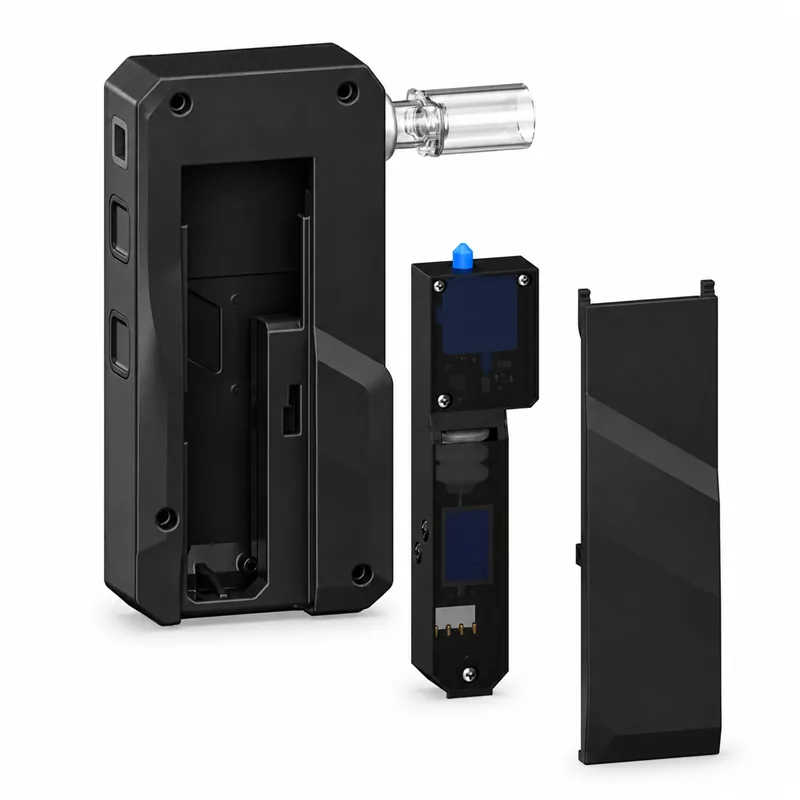
Replacing a sensing component does not, by itself, confirm that the entire instrument is measuring within its required tolerance.
Calibration compares the device response with a known reference and, where necessary, adjusts the instrument. Accuracy verification checks whether the device remains within the applicable limits.
Some manufacturers provide pre-calibrated replacement modules, but this does not establish a universal rule for all breathalyzers. After installation, device-specific checks may still be required.
For the Airsense S1, buyers should follow the approved replacement procedure and confirm the necessary calibration or verification steps with Airsense technical support.
Never assume a replaced sensor is ready for regulated testing without completing the relevant maintenance requirements.
How the Airsense S1 Uses a Replaceable Fuel Cell Sensor
The Airsense S1 combines a UK Dart electrochemical fuel cell with pump-assisted sampling, pressure sensing and a replaceable sensor architecture.
Its design also includes features that may be useful to professional equipment distributors:
- Replaceable UK Dart fuel cell sensor
- Pump-assisted breath sampling with pressure detection
- Adjustable blowing time from 1 to 6 seconds
- 1.54-inch IPS color display
- Storage for up to 10,000 test records
- Built-in Bluetooth and supported mobile app connectivity
- Compatible desktop software for supported data and device management tasks
S1 is a professional feature platform, but suitability for a particular regulated application must be assessed against the exact configuration and applicable local requirements.
Review the S1 product specifications or explore available technical support resources.
What Should Buyers Confirm Before Purchasing?
If sensor serviceability is an important selection criterion, ask the manufacturer these questions before ordering:
- Is the sensor designed to be replaced separately from the device?
- Who is permitted or trained to perform the replacement?
- Are compatible replacement modules available for future servicing?
- What calibration and verification steps are required afterward?
- What maintenance documentation and technical training are provided?
- What is the procedure for handling defective or out-of-tolerance devices?
For a distributor, these answers should be part of the product evaluation process, alongside pricing, certification documents and software compatibility.
If you are preparing a new equipment line, our sample-to-bulk-order guide explains how to organize the broader purchasing process.
Frequently Asked Questions
Can all breathalyzer sensors be replaced?
No. Some devices have user- or service-replaceable modules, while other products require different servicing arrangements. Always check the specific model.
When should a fuel cell sensor be replaced?
There is no single replacement schedule for every sensor. Replacement should follow the manufacturer's maintenance guidance and the results of appropriate technical evaluation.
Can a distributor maintain its own breathalyzer fleet?
That depends on the devices, available tools, required training and local regulations. Airsense can discuss calibration guidance and technical support for its supported products.
Does the replaceable S1 sensor make it a certified law-enforcement device?
No. Sensor serviceability does not establish law-enforcement or evidential approval. Any required certification must be verified for the exact device and intended market.
AIRSENSE S1 PROFESSIONAL BREATHALYZER
Explore a Breathalyzer Designed for Ongoing Service
Ask our team about the S1 replaceable sensor, maintenance support, compatible software and OEM options for your market.
Request S1 Technical Details