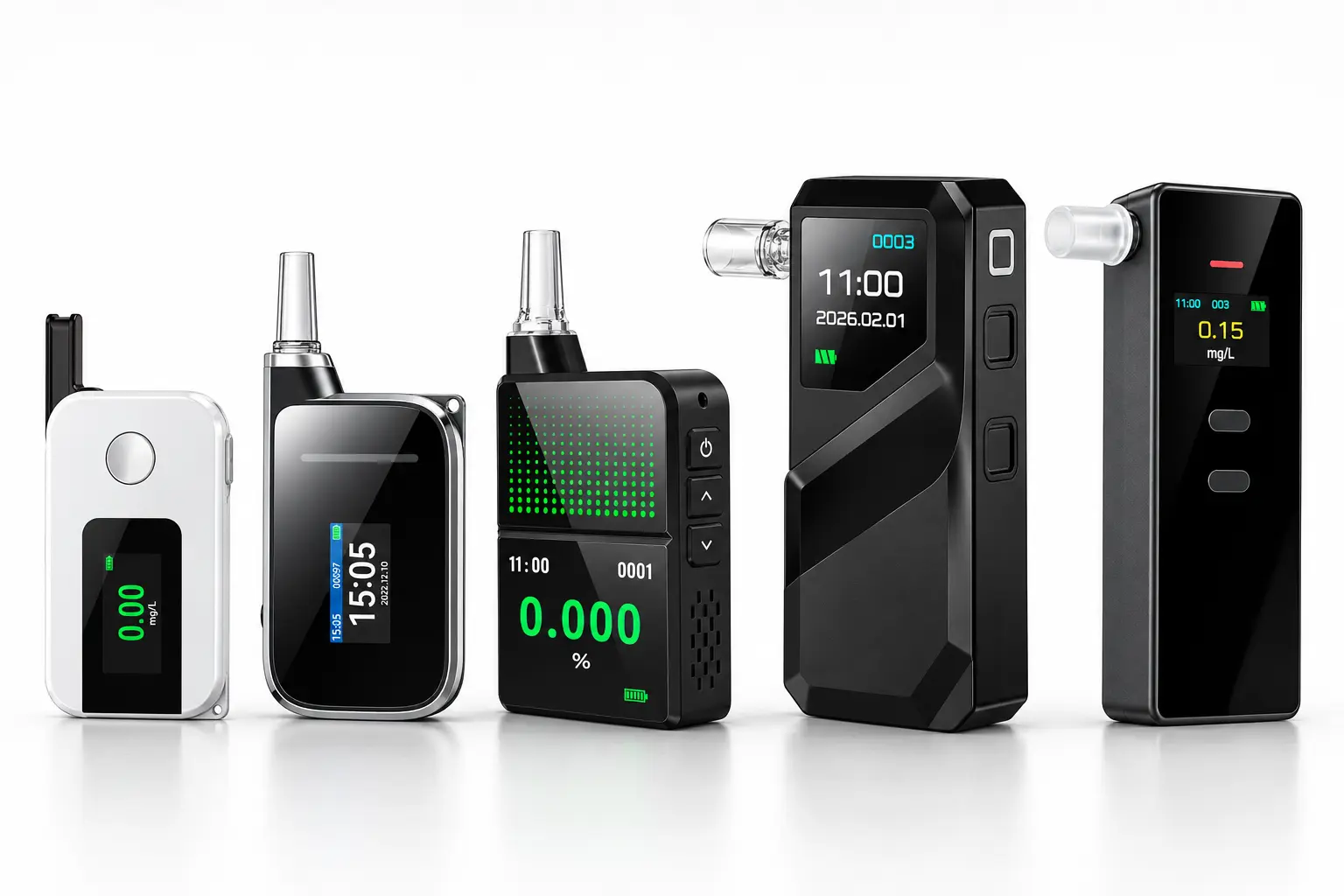
SENSOR TECHNOLOGY & PRODUCT SELECTION
Fuel Cell vs Semiconductor Breathalyzers: Which Is Right for Your Market?
Fuel cell and semiconductor breathalyzers both detect alcohol in exhaled breath, but they use different sensing principles. Understanding those differences helps importers, distributors and OEM brands select the right products for their customers.
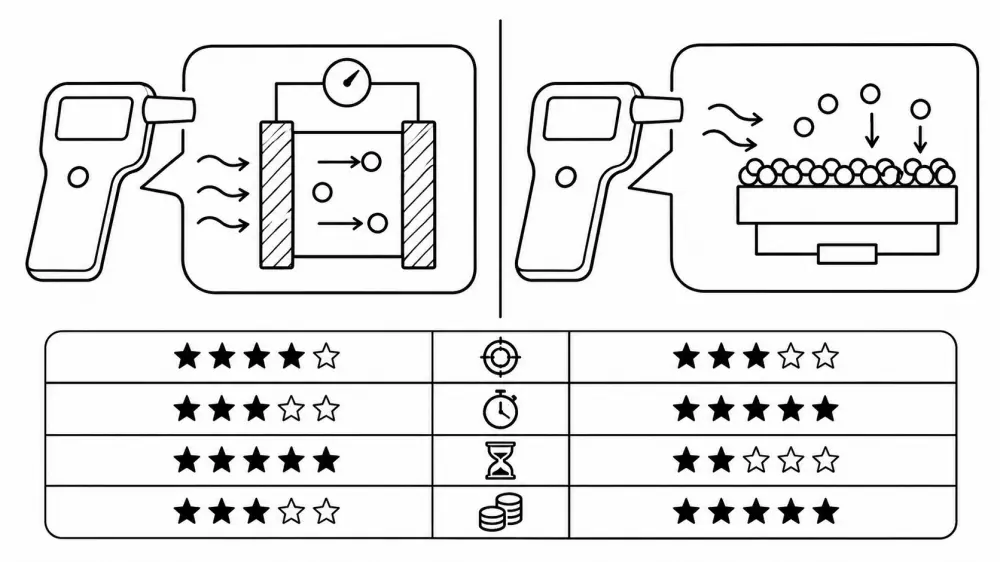
Two Technologies, Two Different Approaches
Although both types of breathalyzer are intended to detect breath alcohol, their internal sensors respond to ethanol in fundamentally different ways.
A fuel cell sensor uses an electrochemical reaction. A semiconductor sensor measures changes in electrical resistance caused by interactions between gases and a heated sensing material.
Neither sensor should be evaluated by its technology name alone. Measurement performance also depends on calibration, sampling design, signal processing, device condition and test procedure.
For a broader explanation of the complete measurement process, see How Breathalyzers Work.
How a Fuel Cell Breathalyzer Works
A fuel cell breathalyzer contains an electrochemical sensor designed to respond to ethanol in a breath sample. When alcohol reaches the sensor, an oxidation reaction produces an electrical signal related to the amount of ethanol detected.
This sensing principle generally offers good ethanol selectivity and is widely used in higher-performance breath alcohol testing devices.
Fuel cell technology can be suitable for personal testing, workplace screening and professional applications, depending on the complete product configuration and applicable requirements.
However, fuel cell sensors still require appropriate calibration, environmental control and maintenance. The sensor type alone does not establish legal or evidential approval.
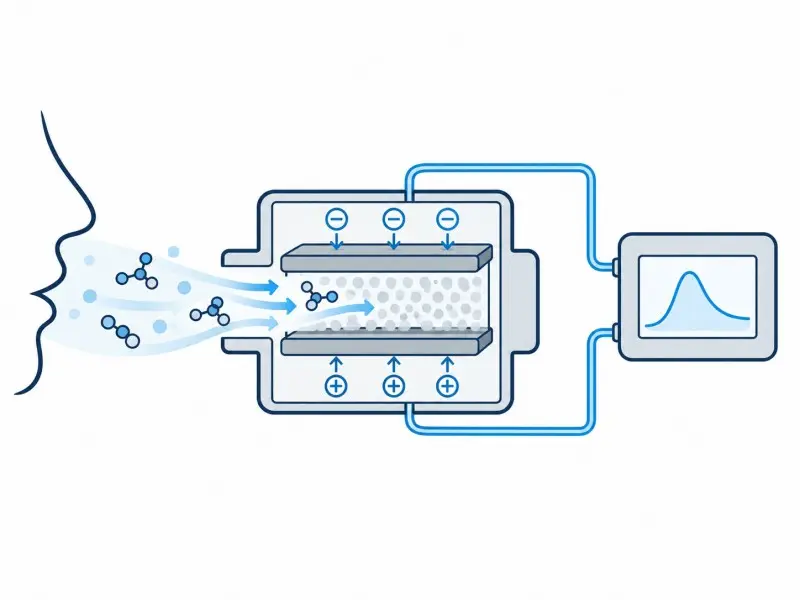
How a Semiconductor Breathalyzer Works
A semiconductor breathalyzer typically uses a metal-oxide sensing element. During operation, the sensor is heated, and the presence of certain gases changes its electrical resistance. The electronics process this change to estimate alcohol concentration.
Semiconductor platforms can be attractive for personal alcohol testers and cost-sensitive consumer product lines. They also allow manufacturers to develop compact devices with modern displays and connectivity features.
Compared with a well-designed fuel cell sensor, a semiconductor sensor may be more sensitive to environmental conditions and interfering gases. Warm-up behavior and calibration stability are therefore important evaluation points.
For example, the Airsense A5 Personal Breathalyzer uses a planar semiconductor sensor and normally requires approximately 20 seconds of warm-up.
Fuel Cell vs Semiconductor: Key Differences
| Comparison | Fuel Cell | Semiconductor |
|---|---|---|
| Detection principle | Electrochemical ethanol oxidation | Gas-related resistance change |
| Ethanol selectivity | Generally higher | Potentially more affected by other gases |
| Warm-up | Often short; model-dependent | Heated sensor generally requires warm-up |
| Measurement consistency | Can provide strong repeatability with proper calibration | More dependent on environmental and sensor conditions |
| Sensor cost | Typically higher | Typically lower |
| Maintenance | Calibration and eventual sensor servicing | Calibration and sensor condition management |
| Typical positioning | Premium personal or professional product lines | Consumer-oriented and cost-sensitive product lines |
These are general technology characteristics, not universal performance guarantees. Actual product specifications, test reports and usage conditions should guide purchasing decisions.
Accuracy Depends on More Than the Sensor
Buyers sometimes assume that choosing a fuel cell automatically guarantees a particular accuracy level. In practice, the complete system matters.
Sensitivity, selectivity, stability and condition.
Breath flow, sample volume and sampling consistency.
Appropriate reference standards and verification procedures.
Signal processing, compensation and measurement algorithms.
Operating temperature, humidity and interfering substances.
Correct timing, mouthpiece use and user instructions.
A pump-assisted device can provide more control over sample collection, but a pump does not automatically make a breathalyzer more accurate in every situation.
Read more about breathalyzer sampling and testing methods.
Comparing Airsense S1 and A5
Airsense offers both fuel cell and semiconductor platforms, allowing buyers to compare different product positions within one manufacturer's range.
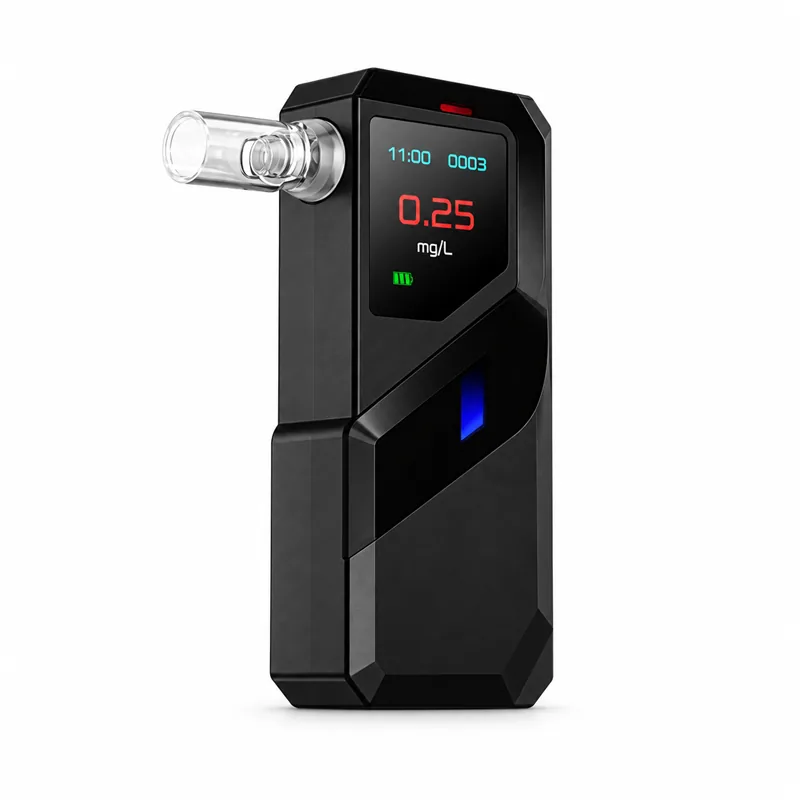
S1 Professional Breathalyzer
- UK Dart electrochemical fuel cell
- Pump-assisted sampling
- Replaceable sensor module
- 10,000 stored test records
- Built-in Bluetooth
Consider S1 for product programs requiring a professional feature set, advanced record management and planned maintenance support.
Explore S1 Specifications →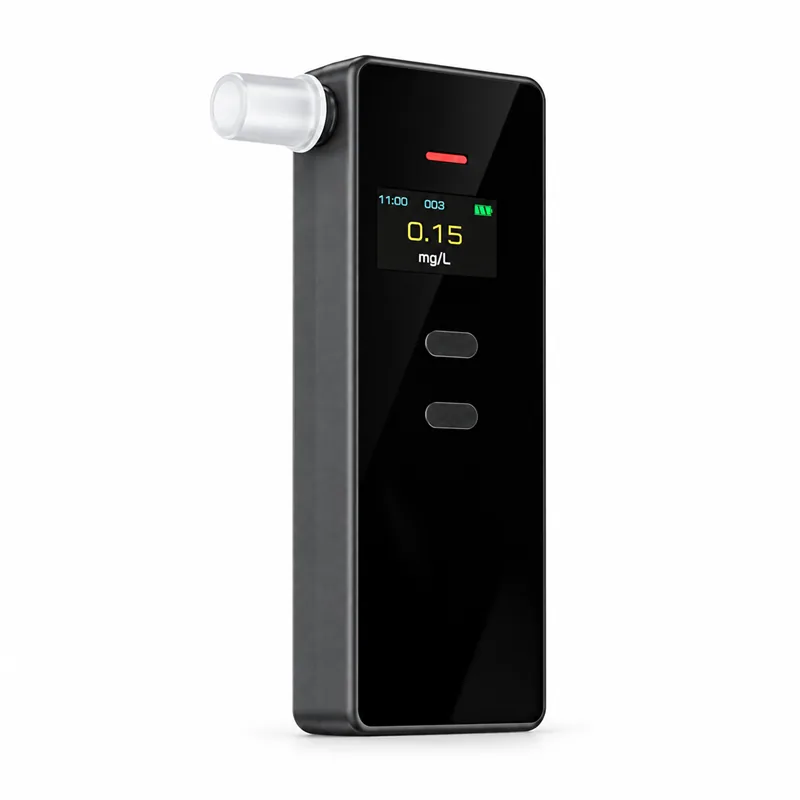
A5 Personal Breathalyzer
- Planar semiconductor sensor
- 1.2-inch IPS color display
- 500 stored test records
- Built-in Bluetooth
- 1,100mAh rechargeable battery
Consider A5 for consumer-oriented product lines where a semiconductor sensor, connected features and personal-use positioning are appropriate.
Explore A5 Specifications →Which Sensor Should You Choose for Your Market?
For Consumer and Online Retail
Consider the full customer experience: appearance, cost, measurement expectations, warm-up time, battery life, instructions and after-sales support. A semiconductor model may suit some product ranges, while a compact fuel cell model can provide a premium alternative.
For Workplace and Fleet Screening
Evaluate sensor performance, sampling consistency, calibration procedures, result management and local program requirements. A suitable fuel cell platform may offer advantages, but specific device and program requirements should determine the final choice.
For OEM and Private Label Brands
Start with the market position you want to achieve. A value-oriented consumer brand and a professional equipment distributor may require very different sensor, software and service configurations.
Airsense can help OEM buyers explore sensor selection, branding, measurement units and supported firmware options.
Questions Buyers Often Ask
Are fuel cell breathalyzers always more accurate?
Not automatically. Fuel cells generally offer better ethanol selectivity, but actual measurement accuracy depends on the full device, calibration and test conditions.
Do semiconductor breathalyzers require calibration?
Yes. Semiconductor-based instruments are also subject to calibration requirements and sensor drift. Follow the manufacturer's instructions for the specific model.
Does a fuel cell breathalyzer require maintenance?
Yes. Fuel cell devices may need periodic accuracy verification, calibration, cleaning and eventual sensor servicing according to the product maintenance program.
Can both technologies be customized for OEM brands?
Yes. Depending on the platform, Airsense can discuss startup logos, device branding, packaging, software settings and market-specific requirements.
CHOOSE THE RIGHT SENSOR PLATFORM
Need Help Comparing Breathalyzer Models?
Tell Airsense about your market, target customers and technical requirements. We can help you evaluate suitable fuel cell and semiconductor products before sampling.
Compare Breathalyzer Models